Blue Egg Layers
A Simple Guide from Sugar Feather Farm
If you’re shopping for blue-egg chickens, it’s easy to think this:
“Blue egg chicken = blue eggs every time.”
We wish it were that simple. But egg color has a little personality—and sometimes a memory.
At Sugar Feather Farm, we raise Ameraucanas, Cream Legbars, True Blues, Easter Eggers, and our own Favacaunas, which are developed using Ameraucanas as part of their foundation. This guide explains what egg colors you can expect from each group in clear, everyday language.
First Things First: What Makes an Egg Blue?
Blue eggs come from a special gene that puts blue color inside the eggshell, not just on the surface.
That’s why true blue eggs are:
Blue outside
Blue inside
Naturally colored all the way through
At our farm, Ameraucanas, Favaucanas, Cream Legbars, and True Blues all carry this blue-egg gene.
So… Why Isn’t Every Egg the Same Shade of Blue?
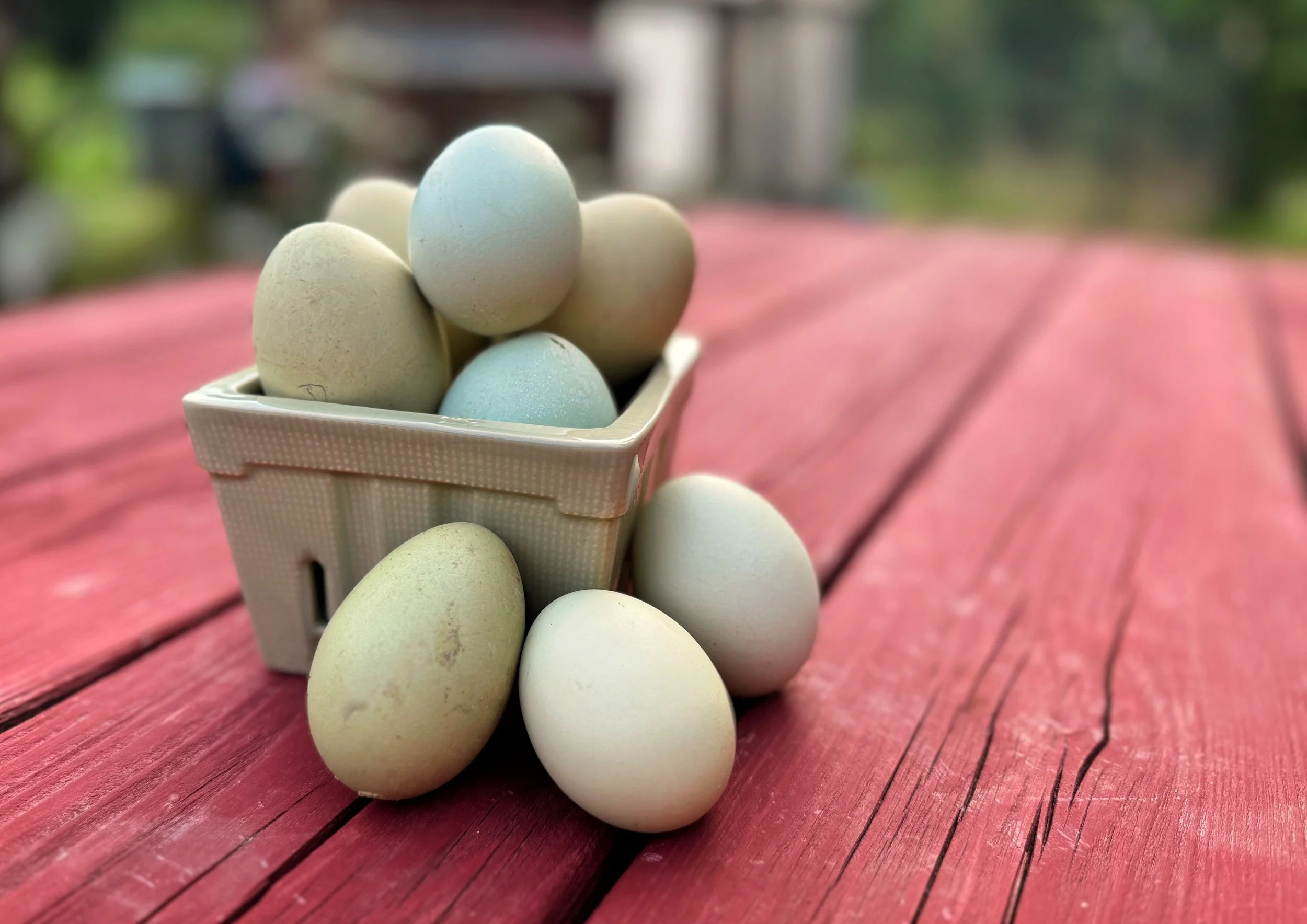
some pretty eggs - if you look closely they are shades of green
Think of egg color like mixing paint.
Blue paint = blue egg gene
Brown paint = brown egg influence
Mix them together = green, teal, aqua, or olive
Some chickens—especially if their family tree includes brown-egg layers somewhere way back—may still have a tiny bit of “brown paint” in their genetic toolbox.
Even if that brown influence is very old, it can still peek through once in a while and tint a blue egg slightly green.
Totally normal. Totally harmless. Still beautiful.
Egg Colors by Breed at Sugar Feather Farm
Ameraucanas
Ameraucanas are the foundation of some of our blue-egg programs and are known for laying true blue eggs.
Most Ameraucanas lay:
Light blue
Sky blue
Powder blue eggs
Occasionally, a hen may lay eggs that lean slightly aqua or blue-green. At Sugar Feather Farm, we carefully select breeding birds for the bluest eggs possible, but small natural variations can still occur.
Favacaunas (Developed Using Ameraucanas)
Favacaunas are a Sugar Feather Farm line developed using Ameraucanas and Faverolles as a foundational breed. Because of this, Favacaunas are also blue-egg layers.
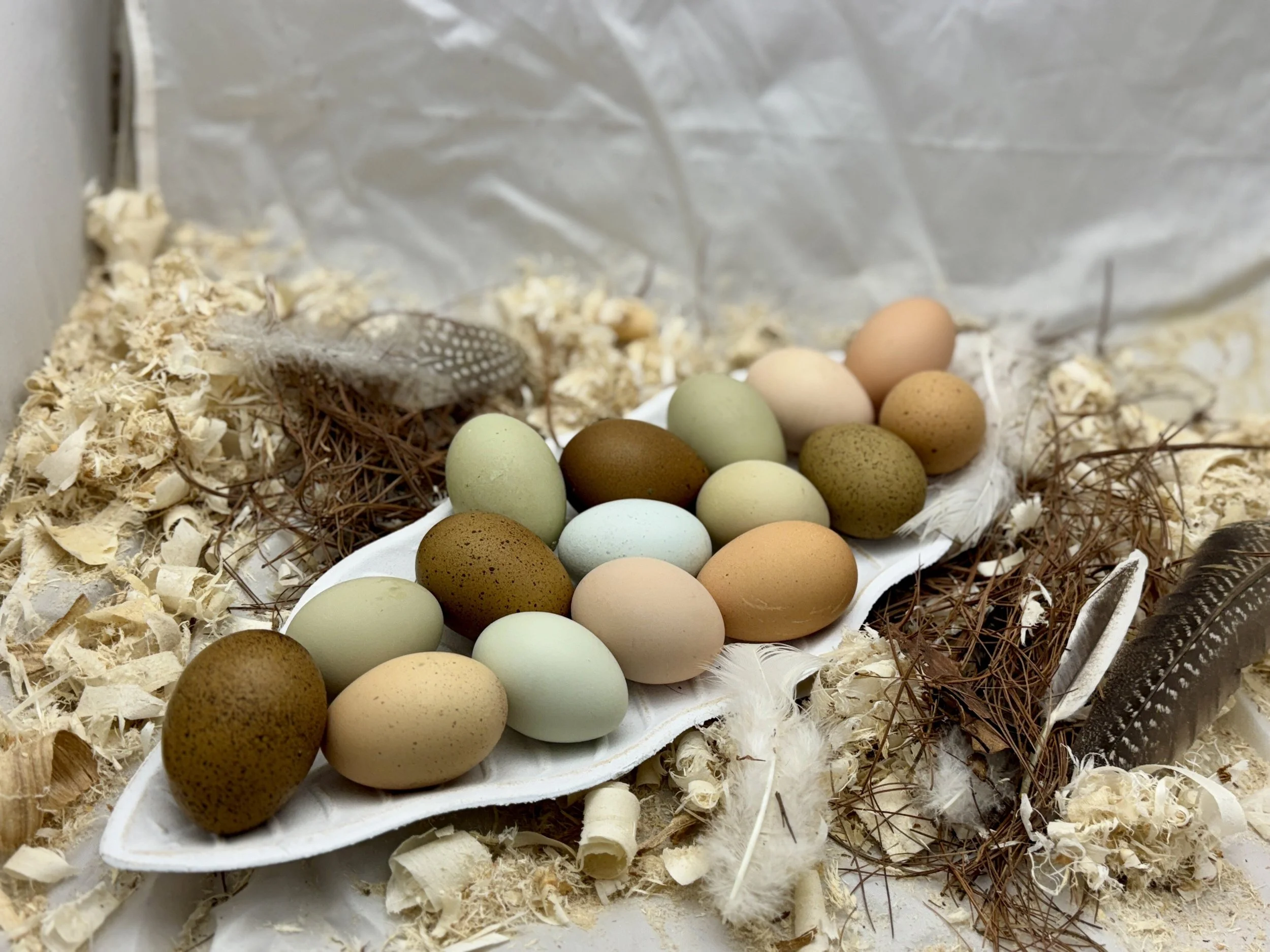
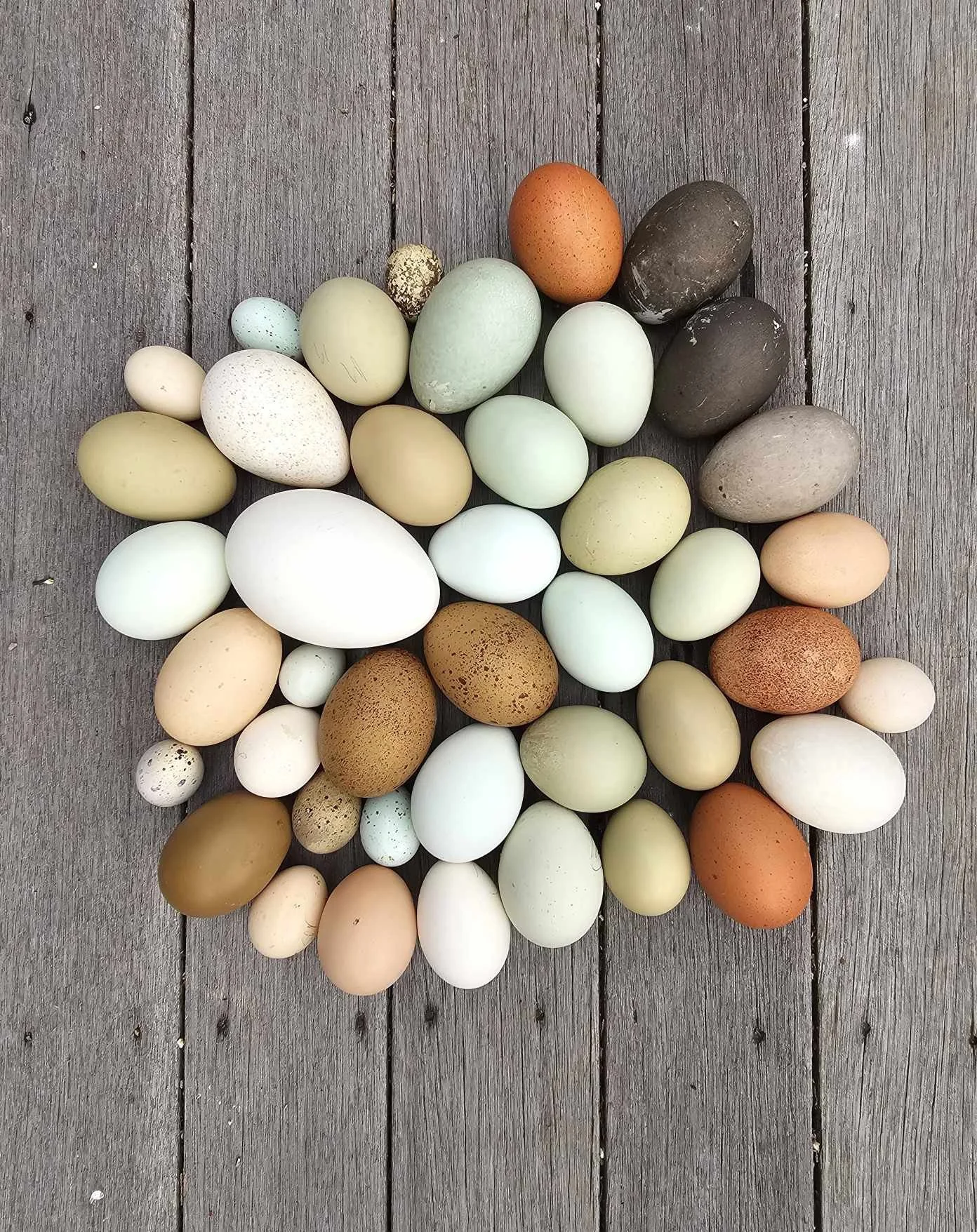
favaucana eggs - a kaleidoscope of color
Favacaunas typically lay:
Blue eggs
Sometimes blue with subtle aqua or green tones
Greens and tans
As with any blue-egg bird, shade can vary depending on individual genetics and how strongly certain traits express. We continue to refine this line through careful selection.
Cream Legbars
Cream Legbars are friendly, active, and great blue egg layers
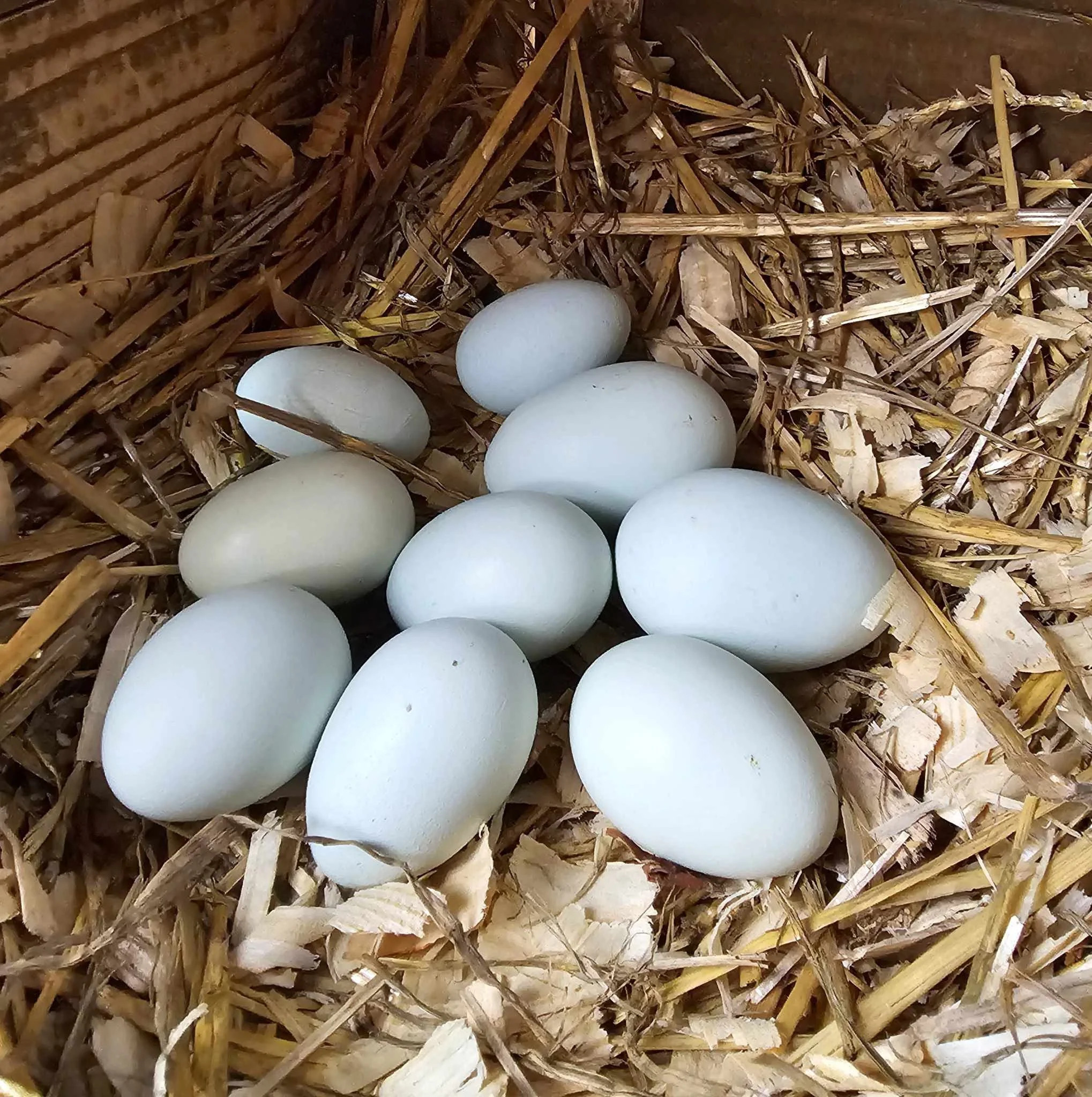
Rich Blue Cream Legbar Eggs
Their eggs are usually:
Light blue
Robin’s egg blue
Sometimes they may lean slightly aqua depending on the hen. This doesn’t mean anything is “wrong”—just that egg color can vary a little from bird to bird.
True Blues

Sugar Feather True Blue eggs
Our True Blues are selected specifically for dependable blue egg production.
They generally lay:
Clear blue eggs
Minor shade differences can occur, but the base color remains blue.
Easter Eggers - The Colorful Surprise Makers
Easter Eggers are where things get fun
The do not lay true blue eggs, but they do lay a wide range of colors, including;
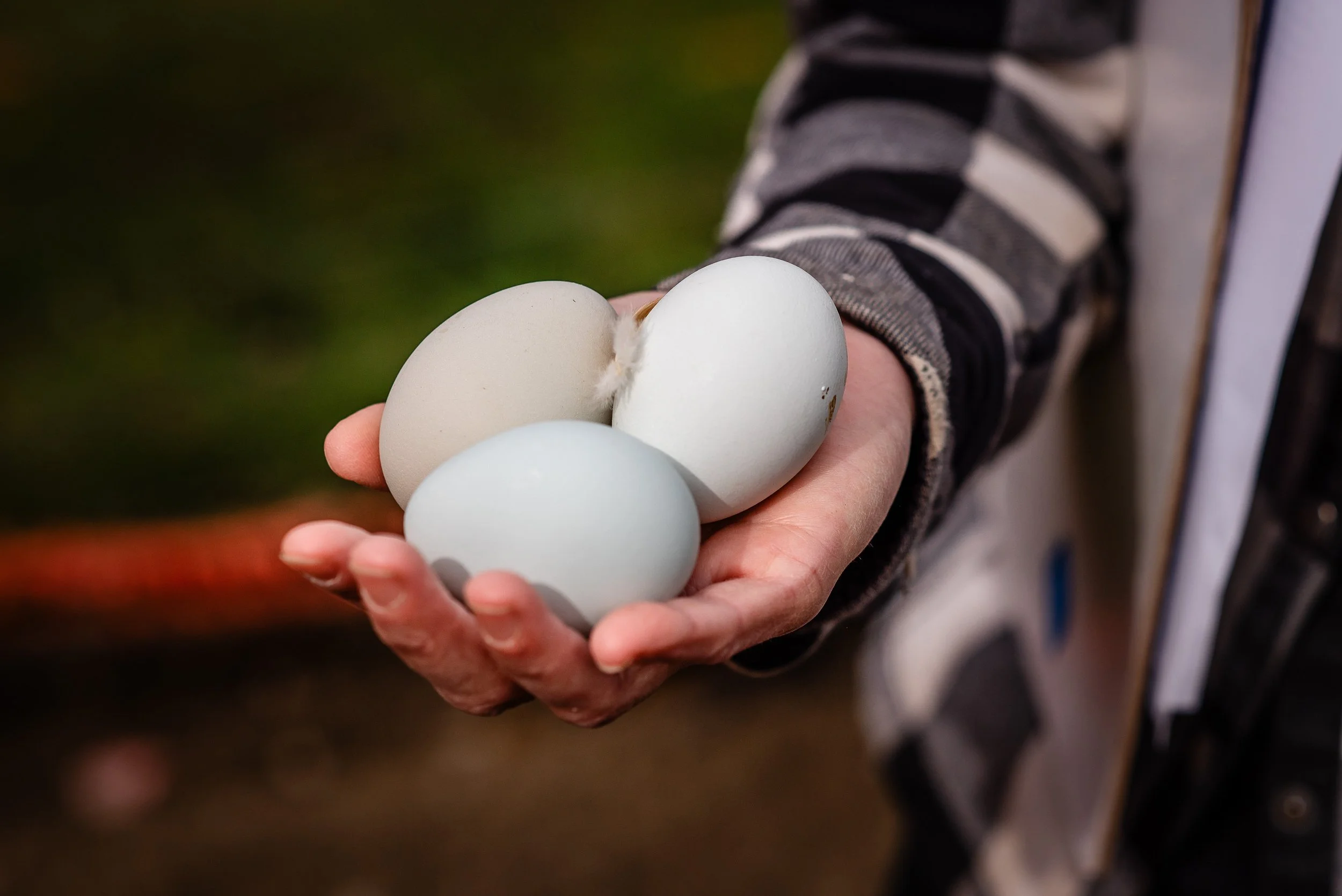
Easter Egger eggs can be many shades
Green
Olive
Teal
Blue
Because Easter Eggers come from mixed birds, their eggs are created by blending blue and brown influences—which is why no two are exactly alike.
In Summary
Egg color isn’t a switch—it’s a blend.
Blue egg breeds lay blue-based eggs
A little green tint is normal and natural
Easter Eggers are intentionally unpredictable
Shade variation is part of the fun, not a flaw
At Sugar Feather Farm, we believe every egg tells a story—and no two flocks (or baskets) are ever exactly the same.
If you ever have questions about egg color, we’re always happy to talk chickens. Cheers to our feathered friends!
Interested in getting started with colored eggs? Get some today!
-
Can a blue egg turn green over time?
No. Egg color is set during shell formation and does not change after laying.
Does a green tint mean something is wrong?
No. A green or aqua tint simply reflects a natural blend of pigments.
Are blue and green eggs healthier than brown or white eggs?
No. All eggs have the same nutritional value regardless of shell color.
Can I create my own colored egg layers?
Yes, absolutely. You will need either a rooster or hen to have the Homozygous Egg Gene.
Sugar Feather Farm owns the article, pictures, and information. They are copyrighted and cannot be used without permission from Sugar Feather Farm.